By Giles Fuchs, Owner of Burgh Island Hotel
Capital is returning to the hotel sector, and those who understand why stand to benefit most. Hotels are tangible assets, priced in line with inflation, and, if well-managed, they offer both income and long-term growth. For private investors willing to look beyond conventional asset classes, the case has rarely been stronger.
The data confirms the momentum. UK hotel investment reached £5 billion in 2025, surpassing the long-term average and exceeding most analysts' expectations despite broader economic challenges. London contributed approximately £3 billion, marking its highest deal volume since 2018. Similarly, across Europe, transactions totalled €22.3 billion in 2024, a 36% rise on the prior year, with first-half 2025 data indicating that this growth continues.
Single assets take the lead
What matters more than headlines is where capital flows. In 2025, the defining trend has been the dominance of single-asset deals. In the UK the majority of investment activity involved individual properties with buyers targeting specific hotels with long-term potential rather than broad, variable portfolios.
This is significant for private investors. High-net-worth individuals have shifted from being among the smallest net buyers in European hotel markets to the largest in the first half of 2025, focusing their capital on upscale and luxury properties. This reflects a growing understanding of what hotels, at their best, actually offer: the security of prime real estate combined with the upside of active, hands-on management. Unlike bonds or passive funds, hotel investments benefit from active management. Hotels can leverage strategies, including improving the quality of service or undertaking a new refurbishment programme, to act as a key indicator for committed investors.
Quality as the differentiator
The hotel market has become more selective, and rightly so. Operators who invest consistently in their buildings, their people, their environmental credentials attract more attention from buyers and lenders alike. Sustainability is no longer a luxury; it is an operational imperative. ESG factors are now treated as material in property valuations, and hotels with credible green certifications regularly command a premium at sale.
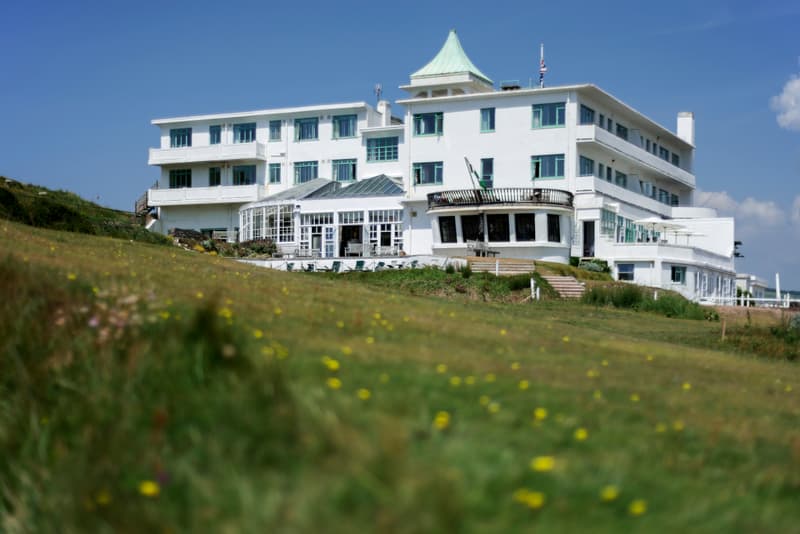
At Burgh Island, this commitment has been in place since 2007, when the hotel first received the Gold Award from the Green Apple Organisation for Conservation, an award it has held every year since. Solar panels on the former tennis courts and heat recovery systems power the building on renewable energy, while a fabric-first approach ensures efficiency improvements outlast any single refurbishment cycle. In the kitchen, 80% of ingredients are sourced from within 30 miles, a practice that reduces food miles, strengthens ties with local suppliers, and, as guests increasingly notice, improves the food itself. However, the greatest opportunities to acquire a hotel do not exist solely within London or the larger European capitals. Throughout the UK, there is an increasing demand for unique hotels in desirable areas with distinct personalities. A restored historic hotel located in a popular coastal or rural area has a quality that no new-build hotel can duplicate. It holds a unique story and a sense of place that guests are willing to pay for. Burgh Island off Devon's coast, with its Art Deco heritage and link to Agatha Christie, offers unique history, creating scarcity and a compelling story. Since acquiring it in 2018, we have seen significant value growth through sustained investment in the building, the team, and the guest experience.
A different type of ownership
Private investors are increasingly looking for more than financial returns from hotel investments. Hotels are visible tangible assets whose owners can shape both the property and its place in a community. At Burgh Island, we employ 75 staff year-round, rising to 95 in summer, making us the largest employer in the local area. We have invested £1 million in new staff accommodation, converting a former care home to house employees in a region where average property prices now exceed £418,000. Hotels like this employ locals, support suppliers, and contribute directly to the communities around them.
The volume of capital returning to the hotel sector suggests that investors are reaching the same conclusion. A well-chosen hotel is not simply a property play. It is an opportunity to own a real asset, run a purposeful business, and contribute something lasting to a place. For investors who think in decades rather than individual deal cycles, hotels are increasingly considered attractive investment opportunity.