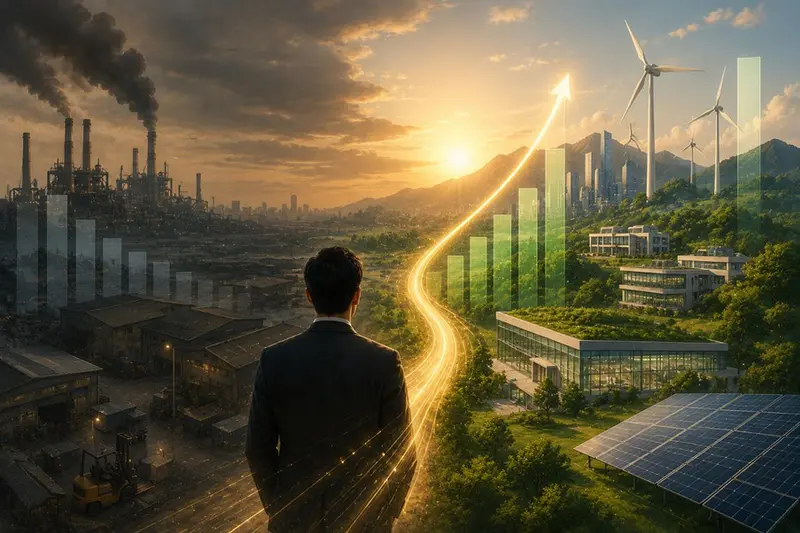
For years, wealth creation followed a familiar public narrative.
Build a successful career. Increase income steadily. Invest consistently. Accumulate assets. Upgrade lifestyle gradually. Financial success often appeared closely tied to visible achievement — larger homes, luxury purchases, career status, and expanding portfolios.
The formula seemed relatively straightforward.
Work harder, earn more, and wealth would eventually follow.
For a long time, this model appeared to work reasonably well, particularly during long periods of economic expansion and stable market growth. Rising property values, expanding equity markets, technological innovation, and global investment opportunities helped millions build long-term financial security.
Yet beneath this traditional view of wealth, another shift has quietly started emerging — one that may ultimately redefine how people think about financial success over the next decade.
Increasingly, wealth creation is becoming less about visible accumulation and more about long-term flexibility, emotional stability, and resilience inside an increasingly unpredictable world.
This shift is subtle, but its implications are enormous because it changes not only how people invest, but also how they define financial freedom itself.
The future of wealth creation may depend less on appearing wealthy and more on building financial systems capable of protecting personal stability through periods of uncertainty, technological disruption, and rapid economic change.
Historically, wealth creation was often associated with accumulation. More assets suggested greater security. More consumption signaled success. Financial progress frequently became visible through lifestyle expansion.
Modern economies reinforced this mindset. Consumer culture encouraged constant upgrading. Professional identity became closely tied to income progression. Social media intensified comparisons surrounding wealth, success, and status.
At the same time, technology transformed investing itself.
Retail investing became more accessible. Financial information spread instantly. Digital platforms lowered barriers to market participation. Real-time trading apps accelerated investment activity dramatically. Wealth management tools became widely available through smartphones and digital ecosystems.
Operationally, these developments improved financial accessibility enormously.
But they also changed the emotional experience of money.
Consumers today navigate environments saturated with:
- economic headlines
- market volatility
- financial influencers
- investment predictions
- inflation concerns
- housing affordability pressure
- constant financial comparison
As a result, modern wealth creation increasingly feels emotionally demanding.
This emotional shift is becoming financially important.
People are beginning to realize that wealth itself means very little if financial success comes alongside constant anxiety, instability, or exhaustion.
Increasingly, consumers are redefining what financial security actually feels like.
This transformation may become one of the defining economic shifts of the next decade.
Historically, financial success was often measured externally. Expensive possessions, visible luxury, and material expansion signaled achievement. Wealth itself became highly performative in many societies.
Today, however, many individuals increasingly define wealth differently.
Freedom is becoming a form of wealth.
Time is becoming a form of wealth.
Flexibility is becoming a form of wealth.
Emotional stability is becoming a form of wealth.
This shift is particularly visible among younger generations who increasingly prioritize:
- financial independence
- manageable lifestyles
- reduced financial stress
- flexible work arrangements
- sustainable income streams
- long-term resilience
This does not mean ambition disappeared.
Rather, people increasingly want financial systems supporting broader quality of life rather than simply maximizing visible consumption.
That distinction matters enormously because it influences how people invest, save, spend, and structure careers.
According to BlackRock’s Global Investor Pulse survey, investors increasingly prioritize long-term financial security, resilience, and stability over purely short-term gains amid growing economic uncertainty globally.
https://www.blackrock.com/corporate/insights/investor-pulse
This reflects something larger than changing investment behavior.
It reflects changing emotional expectations surrounding money itself.
For years, financial culture often rewarded constant activity. Markets moved faster. Investment commentary became continuous. Social media transformed financial opinions into entertainment. Retail investing accelerated dramatically during periods of heightened market participation.
As information intensity increased, many consumers began feeling pressure to monitor markets continuously, react quickly, and optimize constantly.
But over time, many investors discovered that permanent financial stimulation can weaken long-term confidence.
This realization is quietly changing wealth creation strategies.
Increasingly, individuals are gravitating toward approaches emphasizing:
- patience
- consistency
- diversification
- financial resilience
- sustainable growth
- emotional discipline
In many ways, wealth creation itself is becoming more behavioral.
This may explain why long-term investing principles continue regaining attention despite periods dominated by speculation and short-term market excitement.
Historically, some of the world’s most successful investors often emphasized emotional discipline more than constant activity. Patience, consistency, and long-term thinking repeatedly proved valuable during periods of uncertainty.
Those lessons are becoming increasingly relevant again.
According to Vanguard research, investor behavior and emotional discipline often influence long-term financial outcomes more significantly than short-term market timing itself.
https://investor.vanguard.com/investor-resources-education/article/behavioral-coaching
This emotional dimension of wealth creation is especially important because uncertainty itself has become more visible within modern economies.
Consumers today navigate:
- inflation pressure
- housing affordability concerns
- technological disruption
- changing labor markets
- geopolitical instability
- rapidly evolving industries
In this environment, wealth increasingly functions as protection against unpredictability rather than simply a symbol of achievement.
That may fundamentally reshape how people evaluate financial success.
Historically, wealth accumulation often focused heavily on maximizing returns. While returns remain enormously important, many individuals now increasingly value:
- liquidity
- optionality
- flexibility
- resilience
- financial peace of mind
This shift also influences career decisions.
For years, professional success often revolved around maximizing income through increasingly demanding career structures. Today, however, many people increasingly prioritize work arrangements supporting broader lifestyle stability.
Remote work accelerated this transformation significantly. The pandemic forced many individuals to reassess priorities surrounding time, stress, commuting, and personal well-being. As a result, wealth creation increasingly became connected to lifestyle sustainability rather than income alone.
This helps explain growing interest in:
- passive income
- entrepreneurship
- flexible careers
- diversified investments
- financial independence strategies
- long-term wealth preservation
People increasingly want money to create flexibility, not simply consumption.
This distinction is subtle but economically important.
Technology is also reshaping wealth creation profoundly.
Artificial intelligence, automation, digital investing platforms, and predictive analytics are transforming financial markets rapidly. Retail investors now access tools once available primarily to institutions. Information spreads globally within seconds. Market participation itself became more democratized.
Operationally, these changes improved access enormously.
But they also intensified emotional pressure.
Consumers increasingly feel expected to:
- stay financially informed constantly
- react quickly to market movements
- optimize investments continuously
- monitor economic developments permanently
As a result, many individuals increasingly seek financial approaches reducing cognitive overload rather than amplifying it.
This may become one of the defining trends shaping wealth management over the next decade.
The future of wealth creation may depend not simply on maximizing returns, but on creating financial systems people can sustain emotionally over long periods of time.
According to Fidelity’s investor insights research, financial confidence and emotional preparedness increasingly influence investor satisfaction, decision-making, and long-term engagement alongside portfolio performance itself.
https://www.fidelity.com/about-fidelity/investment-management/investor-insights
This shift is also influencing how wealth itself is displayed publicly.
Interestingly, many affluent consumers increasingly prioritize privacy and understatement over highly visible luxury. “Quiet wealth” and understated consumption patterns continue growing across high-net-worth demographics globally.
This reflects changing attitudes surrounding status itself.
For many individuals today, true financial confidence increasingly feels less performative and more internal.
People increasingly value the ability to:
- make independent decisions
- avoid financial panic
- navigate uncertainty comfortably
- maintain long-term stability
- preserve flexibility during change
In many ways, wealth itself is becoming more psychological.
This may represent one of the most important but least discussed financial shifts happening today.
Modern consumers increasingly recognize that financial success is not simply about accumulating more.
It is also about creating enough stability to think clearly, adapt comfortably, and live without constant financial fear.
That realization changes how people approach investing, careers, spending, and long-term planning.
Importantly, this does not mean ambition is disappearing.
If anything, building resilient wealth may require greater discipline than speculative financial behavior. Long-term financial security still depends heavily on patience, education, consistency, and thoughtful decision-making.
But the emotional relationship surrounding money is evolving.
Consumers increasingly want wealth to create calm rather than pressure.
The future global economy will continue changing rapidly. Artificial intelligence, automation, digital finance, changing labor markets, and economic volatility will continue reshaping financial systems throughout the coming decade.
But another quieter transformation may occur alongside these developments.
The individuals most likely to build lasting wealth may not simply be those chasing maximum visibility or constant financial excitement.
They may increasingly be the people capable of building resilient financial systems aligned with long-term emotional sustainability.
That distinction matters enormously.
Money creates opportunity. But financial confidence creates freedom.
And over the next decade, that difference may quietly redefine what wealth creation truly means.